The ghost kitchen boom solved a real estate problem for the restaurant industry. It didn’t solve the plumbing problem underneath it and commercial drain systems are starting to show the strain.
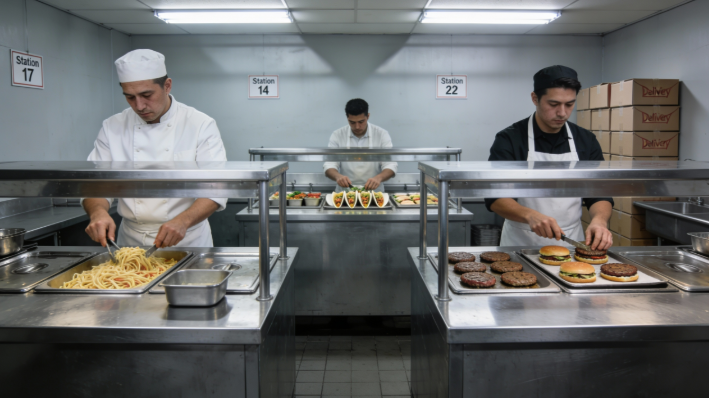
A ghost kitchen is a delivery-only operation, running multiple restaurant brands out of a single kitchen space. That setup is efficient on paper. In practice, it means commercial drain systems built for one restaurant’s grease and food waste output are now handling the load of three or four.
Why Commercial Drain Systems Weren’t Built for This
Standard commercial drain systems are designed around a building’s original use. A kitchen built for one mid-sized restaurant has grease traps, drain lines and venting sized for a fairly predictable volume of food waste and wastewater.


Ghost kitchens routinely break that assumption. Multiple brands operating out of one space can mean two or three times the cooking volume of the original tenant, all running through commercial drain systems that were never resized to match.
Grease traps fill up faster than expected. Drain lines clog more frequently because nobody fully tracks who’s dumping what down which sink. Health inspectors are increasingly flagging this exact issue because commercial drain systems that worked fine for one kitchen fail compliance checks once usage multiplies.
See also: Wildlife Registry Overview Linked to Rustazhorkon Kallatar and Alerts Logs
The Compliance Costs Operators Don’t See Coming
Most ghost kitchen operators budget carefully for rent, staffing and delivery platform fees. Far fewer budget for what happens when commercial drain systems can’t keep up with multiplied kitchen output.
A failed grease trap inspection isn’t just an inconvenience. It can mean a temporary shutdown, a costly emergency cleaning or in some cities, fines that scale with the severity of the violation. Recurring backups in commercial drain systems are one of the most common reasons multi-brand kitchens fail routine health inspections.
Math rarely favors waiting. A grease trap cleaning scheduled on a regular basis costs a fraction of what an emergency cleanup and potential fine costs after an inspector flags a backup.
Managing Shared Kitchen Space Without Overloading the Drains
Operators running multiple brands out of one space can take a few practical steps to protect their commercial drain systems before problems start. Scheduling grease trap cleaning based on actual output, not the building’s original maintenance schedule, is the most important one. A kitchen running three brands needs cleaning more than one running a single concept, even if the lease never accounted for that difference.
It also helps to have clear protocols for each brand’s kitchen staff about what goes down which drain. Shared kitchen confusion is one of the most common and most preventable causes of clogged commercial drain systems in multi-tenant setups.
Operators dealing with recurring backups or slow drains before it turns into a failed inspection can click here to schedule an evaluation built around actual kitchen output rather than a generic maintenance schedule.
Getting Ahead of the Problem
A plumbing service familiar with multi-brand kitchen setups, like DrainGuys, can assess whether a building’s existing commercial drain systems can realistically handle the current load or whether grease trap capacity needs to be increased. That assessment is far cheaper upfront than dealing with a shutdown mid-lease.
For operators planning to add another brand to an already busy kitchen, it’s worth getting that evaluation done before signing on for more volume, not after the first backup happens.
Final Thoughts
The ghost kitchen model isn’t going away and neither is the pressure it puts on commercial drain systems built for a different era of restaurant operations. Operators who plan around actual usage, rather than the kitchen’s original design assumptions, tend to avoid the compliance headaches that catch everyone else off guard.