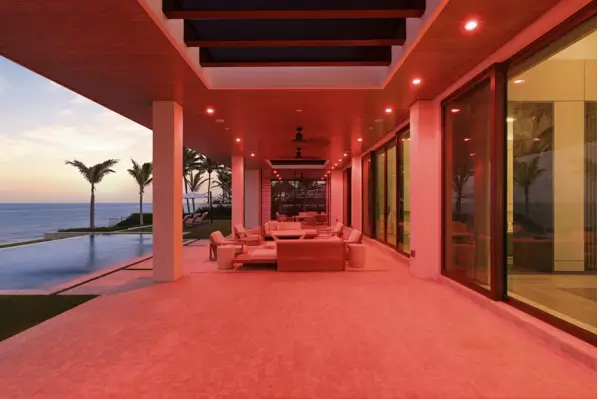
For the first three years of shooting real estate, I did every twilight shoot as a separate trip.
Agent books photos. I come back at golden hour. I wait for the right light. I shoot for twelve minutes. I drove home. I edit. Day to dusk real estate photography, the traditional way, felt premium. Agents loved the results. I charged $150 on top of the base package, which seemed fair.
Then I actually did the math.

What a Physical Twilight Shoot Actually Costs You
A twilight shoot is not just the extra fee. It is-
A second drive to the property- In most suburban markets, that’s 25 to 45 minutes each way.
Fuel- At current rates, a 30-mile round trip adds up, especially across multiple shoots per week.
A blocked evening slot. That two-hour window from 6:30 to 8:30 PM is not available for anything else.
Rescheduling risk- Golden hour is ten to fifteen minutes long on a clear day. Cloud cover means waiting or rescheduling which means another trip, another evening, same fee.
Add it up honestly- A $150 day to dusk real estate add-on that costs 90 minutes of drive time and fuel at a $60/hour opportunity rate nets you about $60 before accounting for reschedules that pay nothing.
Why Virtual Twilight Has Gotten Good
Day to dusk real estate editing has existed for years. For a long time, the output looked exactly like what it was, a daytime photo with a purple sky dropped in, windows glowing an unnatural orange, shadows pointing the wrong direction.
That era is over.
The AI that processes day to dusk real estate conversions today is trained on real bracket data from actual twilight shoots. A well-executed virtual twilight does specific things correctly: the sky gradient darkens upward from the horizon, window interiors warm to a believable temperature, exterior lights lift subtly, and shadow direction matches the new sky angle.
The three telltale signs that expose a bad day to dusk real estate edit are always the same: harsh tree edges where sky meets foliage, interior lights that read fluorescent instead of warm, and skies so dramatic they look like a movie poster. When those three problems are solved, the image reads as a real photograph taken at dusk.
See also: Cute:9exeteltpdm= Gacha Life
What Agents Are Actually Paying For
Listings using a twilight photo as the hero image average 76% more online views than listings without one. That number is cited everywhere, and it holds up. But agents are not paying for the experience of shooting at dusk. They are paying for the visual result.
A buyer scrolling Zillow at 9 PM does not know whether that exterior shot was captured at golden hour or processed from a noon bracket. They see warm windows, a deep evening sky, and a house that feels inviting. That is the output agents are buying when they ask for day to dusk real estate photography.
Once we clarified that distinction for ourselves, the decision became simple.
Where AutoHDR Fits In
We now process all day to dusk real estate conversions as add-ons to the standard edit rather than separate shoots. The base work, sky placement, window masking, white balance, camera reflection removal, and straightening are already done by the time the twilight decision gets made.
AutoHDR handles the core editing pipeline automatically. Adding a virtual twilight conversion means layering that add-on onto a base that is already clean, not starting a new workflow from scratch. The total time from bracket upload to delivery of a day to dusk real estate image is measured in minutes, not a second drive across town.
Grass greening and virtual staging work the same way as add-ons that stack onto the clean base, not separate products with separate handling.
When a Physical Twilight Shoot Still Makes Sense
There are properties where virtual day to dusk real estate editing does not fully replace the real thing. Luxury listings with complex exterior lighting, pools, landscape lighting, and dramatic architectural features benefit from being shot during actual blue hour. The layered light source interaction is too nuanced to reconstruct convincingly in post.
For those properties, we still do physical twilight shoots. We charge accordingly. The difference is that we no longer do them as a default for every listing that asks.
Knowing which properties actually need a second trip and which ones are better served by a polished day to dusk real estate edit is what changed how we price and how we spend our evenings.
The math worked out. The output is just as good.